


 En
En
The best social media strategy for Saudi businesses is not built around posting more content. It is built around posting the right content, on the right platform, for the right audience.
In Saudi Arabia, brands need more than visibility. They need trust, cultural relevance, clear messaging, and a plan that connects social media with business goals. That is where a smart social media strategy becomes a real growth tool.
For brands that want a consultative, results-focused approach, Partners Marketing Solutions positions itself as a Saudi marketing partner for government and private sector work, with services that include strategy, digital marketing, social media, content, design, media production, events, and PR.
What is the best social media strategy for Saudi businesses?
The best strategy is one that matches your business goals, audience behavior, and platform mix.
A strong social media strategy for businesses in Saudi Arabia should do four things:
- Build brand awareness.
- Create trust and authority.
- Drive engagement with the right audience.
- Support leads, inquiries, or sales.
That means your strategy should not focus only on likes or followers. It should support the full customer journey, from first discovery to final action.
Understand the Saudi audience first
Before you create content, study the audience. This is one of the most important steps in how to create a social media strategy.
Saudi audiences are active, highly connected, and mobile-first. They also respond well to content that feels relevant, modern, and respectful of local culture.
What to analyze
Look at these points before you plan your content:
- Age group
- Language preference
- Interests
- Buying behavior
- Most-used platforms
- Peak engagement times
- Pain points and goals
This step helps you avoid generic content. It also improves your chance of building a message that feels personal and credible.
Choose the right platforms
Not every platform fits every brand. A good social media marketing strategy starts with platform selection.
Best for visual brands, lifestyle content, products, and storytelling.
TikTok
Best for short-form video, awareness, and reach.
Snapchat
Useful for Saudi audiences, especially for fast, informal, high-frequency content.
Best for B2B brands, corporate communication, recruitment, and thought leadership.
X
Useful for updates, opinions, reputation building, and real-time engagement.
The right mix depends on your industry. A B2B company should not use the same strategy as a retail brand. A service company should also not copy the content style of an entertainment brand.
Build content pillars, not random posts
One of the best social media practices for Saudi businesses is to work with content pillars.
Content pillars are the main themes your brand talks about regularly. They help you stay consistent and make planning easier.
Example content pillars
1. Educational content
Teach your audience something useful.
Example: tips, guides, how-to posts, checklists.
2. Brand content
Show who you are, what you do, and why you matter.
Example: about-us content, culture, behind the scenes.
3. Proof content
Show real results, projects, testimonials, and case studies.
4. Engagement content
Ask questions, run polls, use interactive formats, and invite discussion.
5. Conversion content
Promote services, offers, consultations, or lead forms.
When your content is organized this way, your audience understands your value faster. It also becomes easier to measure what works.
Focus on Arabic-first and bilingual content
If you want to know how to grow a brand on social media in Saudi Arabia, one major rule is this: your language must fit your audience.
Many Saudi brands perform better when they use Arabic-first content. In some cases, bilingual content works even better, especially for companies serving mixed audiences.
What works well
- Clear Arabic captions
- Simple English support when needed
- Local expressions used naturally
- Visuals that fit Saudi culture and taste
- Messages that feel professional, not translated
This does not mean every post must be formal. It means every post should feel local, clear, and intentional.
How to improve social media engagement
If your content is not getting engagement, the problem is often not the platform. It is the message, timing, or format.
Use these tactics
Ask better questions
Do not ask weak questions. Ask things people can answer quickly and honestly.
Use short, clear captions
Long captions can work, but only when the first line is strong.
Test formats
Try carousels, short videos, stories, reels, and single-image posts.
Post with a purpose
Every post should do one job: educate, build trust, engage, or convert.
Reply fast
Engagement grows when your brand feels active and human.
A strong social media marketing agency Saudi Arabia should not only post content. It should manage the interaction behind the content as well.
Use a content calendar
A content calendar keeps your strategy consistent. It also helps your team stay focused and avoid random posting.
A simple monthly structure
- 40% educational
- 20% brand storytelling
- 20% engagement
- 20% conversion
This balance works well for many service businesses. It helps you educate first, then sell later.
For a more advanced setup, schedule campaigns by theme. For example:
- Week 1: awareness
- Week 2: trust
- Week 3: engagement
- Week 4: conversion
That structure supports a more strategic social media strategy services model rather than a simple posting routine.
Track the right KPIs
A strategy is only useful if you measure it.
Do not focus only on vanity metrics. Focus on the numbers that matter to business growth.
Important KPIs
- Reach
- Engagement rate
- Click-through rate
- Profile visits
- Leads generated
- Message inquiries
- Conversion rate
- Cost per lead
These metrics tell you whether your content is helping the business. They also show which content types deserve more budget and attention.
Connect social media with business goals
Your social media plan should not exist alone. It should connect to your website, sales process, and brand strategy.
For example:
- A service post should drive to a landing page
- A case study should link to a project page
- A lead post should support a form or WhatsApp inquiry
- A brand post should reinforce trust and positioning
This is where a social media strategy company becomes valuable. It can connect content, paid campaigns, and business goals into one system.
When to use paid social media
Organic content is important, but paid promotion can accelerate results.
Use paid campaigns when you want to:
- Reach a larger audience
- Promote a service
- Generate leads
- Retarget visitors
- Support a launch or campaign
Paid and organic should work together. Organic builds trust. Paid expands reach.
Why many Saudi businesses need a strategy partner
Many companies post content without a clear plan. The result is usually weak engagement, unclear messaging, and low conversion.
A structured team can help with:
- audience research
- content planning
- visual direction
- platform choice
- campaign execution
- reporting and optimization
That is why many brands prefer working with social media management services Saudi Arabia providers instead of handling everything in-house.
At Partners Marketing Solutions Riyadh, the approach is built around integrated marketing, communication, and execution. That makes it easier to align social media with other services such as content, design, web development, and campaign management.
Simple framework you can follow
If you need a practical version of the best social media strategy for Saudi businesses, use this structure:
1. Define the goal
Choose one main goal first. Awareness, leads, traffic, or sales.
2. Know the audience
Build a clear profile of who you are targeting.
3. Pick the platforms
Choose platforms based on audience behavior, not trends.
4. Create content pillars
Keep your content organized and repeatable.
5. Build a calendar
Plan content weekly or monthly.
6. Track performance
Measure what matters and optimize the plan.
7. Improve continuously
Review results, test new formats, and refine your message.
Taqdeer Project Case Study
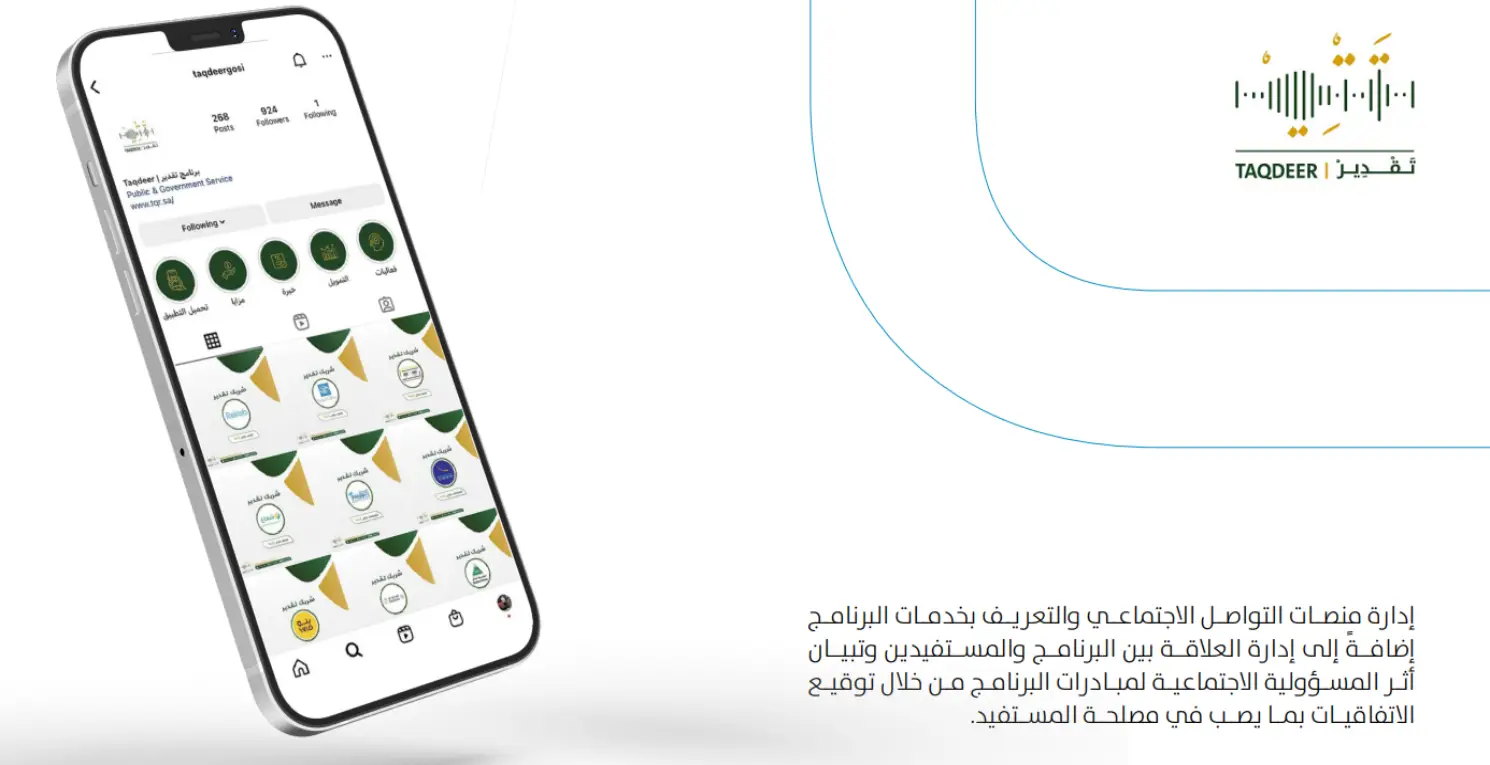
Social Media Management, Beneficiary Engagement, and Strategic Partnerships
Project Overview
The Taqdeer Project focused on strengthening the program’s digital presence, promoting its services, and building a more effective relationship between the program and its beneficiaries. Our role was not limited to social media management — it also included highlighting the social impact of the initiative through strategic partnerships and agreements that served the beneficiaries’ best interests.
The Challenge
The project needed a clear and consistent communication approach that could do more than increase visibility. It required a strategy that would:
- present the program’s services in a clear and engaging way
- create stronger communication with beneficiaries
- support the program’s social value and public impact
- build meaningful partnerships that enhanced the program’s reach and effectiveness
Our Role
We managed the project’s social media platforms and developed communication activities that helped position the program as a trusted and socially impactful initiative.
Our work included:
- managing and publishing content across social media channels
- promoting the program’s services and objectives
- maintaining communication with beneficiaries
- highlighting the project’s social impact
- supporting strategic partnerships and agreements
Our Approach
We adopted a communication-first approach built around clarity, trust, and impact.
1. Social Media Management
We ensured the program’s platforms remained active, consistent, and aligned with its goals. Content was structured to communicate value clearly and maintain audience engagement.
2. Service Promotion
We highlighted the program’s services in a way that made them easy to understand and accessible to beneficiaries.
3. Beneficiary Relationship Management
We supported ongoing communication between the program and its beneficiaries, helping strengthen trust and responsiveness.
4. Social Impact Communication
We focused on showing the real value of the initiative by emphasizing the positive outcomes and social benefit of its activities.
5. Strategic Partnerships
We contributed to building partnerships and agreements that expanded the program’s impact and supported the beneficiaries’ needs.
Results
The project helped improve the program’s communication presence and strengthened its relationship with beneficiaries. It also supported the broader goal of showcasing the initiative’s social impact through meaningful partnerships and clear messaging.
Summary
The Taqdeer Project is a strong example of how strategic social media management and beneficiary-focused communication can support a program’s mission. By combining content, engagement, and partnership development, we helped present the initiative in a way that was clear, impactful, and aligned with its objectives.
Final thoughts
The best social media strategy for Saudi businesses is not complex. It is focused, consistent, and tied to real goals.
When you understand the audience, choose the right platforms, build strong content pillars, and track meaningful KPIs, social media becomes a powerful business channel. It stops being a daily posting task and starts becoming a real growth system.
For companies that want a more strategic approach, this is often the point where it makes sense to request a marketing plan and build a stronger structure around content, campaigns, and brand communication. A well-built strategy saves time, improves clarity, and makes every post work harder.
Contact Us to start with your Brand.

No comment